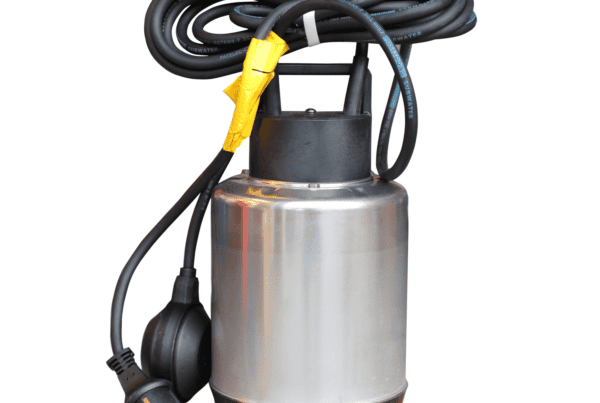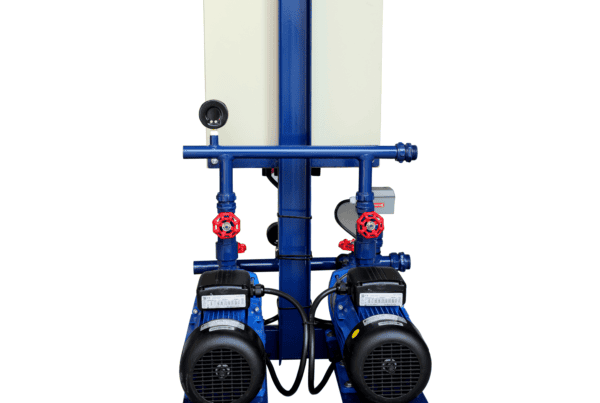

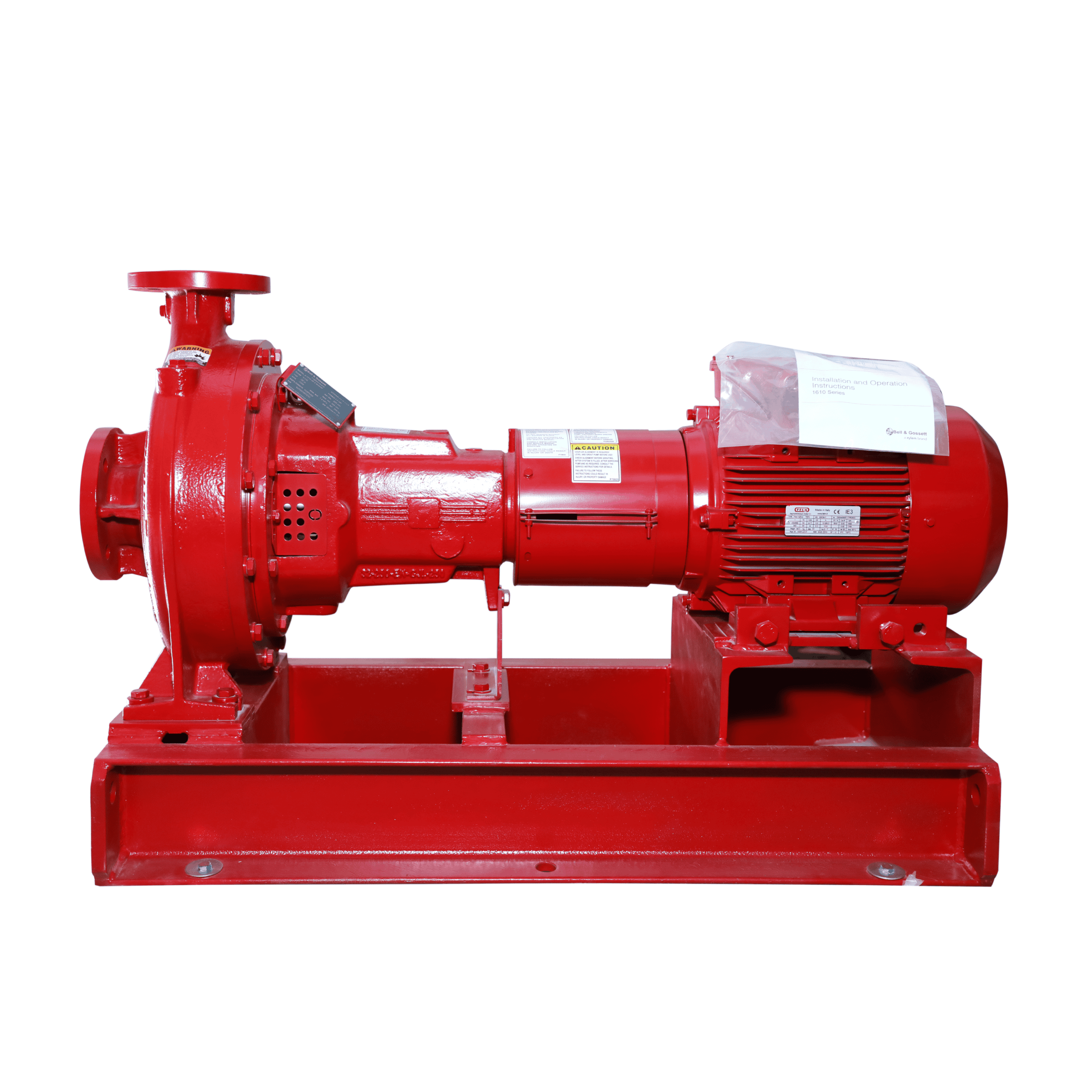

A transfer pump moves water from one place to another, usually from one tank to another. In buildings, the most common example is lifting water from an underground or ground-level storage tank to a roof tank. The roof tank then supplies the floors below by gravity.
Why buildings use transfer pumps
Most UAE buildings receive water from the utility into a lower storage tank. There are good reasons for this:
- The utility supply may not have enough pressure to reach upper floors
- Storage covers interruptions in supply
- The authority may require storage before distribution
From the lower tank, water must be lifted. Transfer pumps do this on demand, controlled by the level in the upper tank.
How a transfer system works
- The roof tank level falls as the building uses water.
- When it reaches the start level, a level switch or transmitter signals the control panel.
- The duty transfer pump starts and fills the roof tank.
- When the stop level is reached, the pump stops.
- If the lower tank is too low, the pumps are locked out to prevent dry running.
The panel alternates between duty and standby pumps and changes over automatically if one fails.
Common arrangements
Single stage transfer. Lower tank to roof tank. Typical for low and mid-rise buildings.
Staged transfer in high-rise buildings. Water is transferred to an intermediate plant floor tank, then to the next, and so on. Each stage serves a pressure zone by gravity or through booster sets.
Transfer between compartments or buildings. In compounds and campuses, transfer pumps move water from a central tank to individual building tanks.
Treated water transfer. From a treatment plant (RO, softener, filter) to a clean water tank.
Transfer pump or booster pump?
A transfer pump fills a tank. A booster pump supplies outlets at controlled pressure. They are often used together: transfer pumps fill the roof tank, and a booster set serves the top floors, which are too close to the roof tank to get enough pressure by gravity.
Sizing a transfer pump
Flow: enough to refill the roof tank within the required time while the building is still using water. For example, a 30 m³ roof tank to refill in 2 hours with average use of 5 m³/h needs about 20 m³/h.
Head: static height from the lowest water level of the lower tank to the roof tank inlet, plus pipe friction and a margin for the inlet valve.
Starts per hour: the volume between start and stop levels must keep motor starts within limits.
See how to calculate pump head for a building.
Common problems
- Pumps running continuously: float valve stuck open, overflow running, or undersized pumps
- Frequent starts: level switches too close together
- Dry running: failed low level cut-out in the lower tank
- Water hammer on stop: slow-closing check valve on a tall riser
Frequently asked questions
What type of pump is used for water transfer?
End suction centrifugal pumps or vertical multistage pumps, depending on flow and head. Submersible pumps in the tank are also used.
How many transfer pumps does a building need?
At least two, duty and standby.
What controls a transfer pump?
Level switches or transmitters in both tanks, connected to a control panel.
Next step
See our transfer pump sets or contact Lifeline to size a system.