

Both submersible and surface pumps move water, but they are installed differently and suit different jobs. Choosing the wrong one leads to priming problems, overheating or early failure.
The basic difference
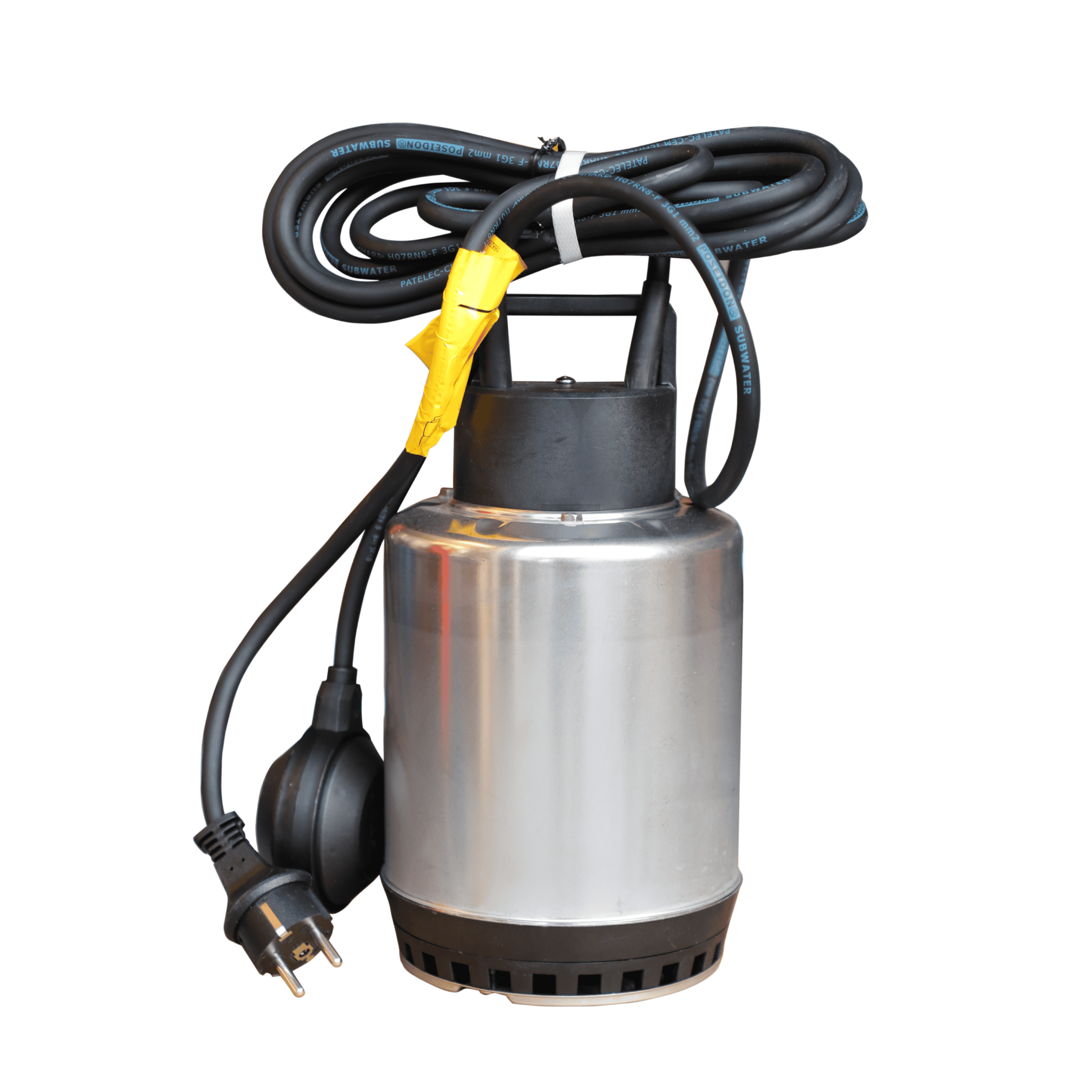
A submersible pump sits under the water. The motor is sealed in the pump body, and the pump pushes water up through a riser pipe.
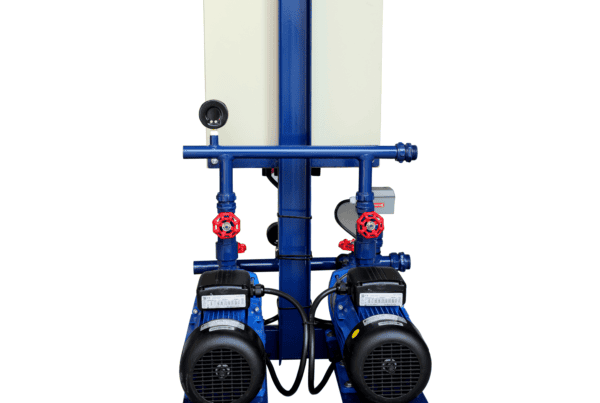
A surface pump sits above or beside the water source, usually in a pump room. It draws water in through a suction pipe and pushes it out through the discharge.
The suction lift limit
This is the most important difference. A surface pump relies on atmospheric pressure to push water up the suction pipe. In theory, atmospheric pressure can support a column of water about 10 m high. In practice, after friction losses and the pump’s own NPSH requirement, a surface pump can reliably lift water only about 6 to 7 m, and less with hot water.
A submersible pump has no suction lift. It is already in the water, so it can be installed at any depth that its head allows. This is why borewells deeper than a few metres always use submersible pumps.
Submersible pumps: advantages and limits
Advantages
- No suction lift limit, suitable for deep wells
- No priming needed
- Quiet, as the pump is under water
- Takes no floor space in a plant room
- The surrounding water cools the motor
Limits
- Harder to inspect and maintain, as the pump must be lifted out
- Motor and cable must be fully sealed; seal or cable damage can cause electrical faults
- Must not run dry
- Usually more expensive for the same duty than a surface pump
Surface pumps: advantages and limits
Advantages
- Easy access for inspection, maintenance and replacement
- Wide range of types, sizes and efficiencies
- Simple to fit with VFDs, gauges and controls
- Generally lower cost for the same duty
Limits
- Limited suction lift
- Needs priming if not installed with flooded suction
- Takes floor space and needs ventilation
- Noise must be considered in residential buildings
Which to choose
| Application | Usual choice |
|---|---|
| Borewell or deep well | Submersible |
| Drainage sump or lift pit | Submersible |
| Sewage sump | Submersible sewage pump |
| Site dewatering | Submersible dewatering pump |
| Transfer from underground tank to roof tank | Surface pump with flooded suction, or submersible in tank |
| Booster set for a building | Surface (vertical multistage) |
| Villa pressure pump | Surface |
| Chilled water and HVAC circulation | Surface |
| Irrigation from a tank or pond | Surface, or submersible if the water level is deep |
Flooded suction makes surface pumps simple
Where a surface pump can be installed below the water level of the tank, it fills with water by gravity and never loses its prime. This is called flooded suction, and it is the standard arrangement for booster and transfer pump rooms in UAE buildings.
Frequently asked questions
Which lasts longer, a submersible or a surface pump?
Both can last many years if correctly sized and protected. Surface pumps are easier to maintain, which helps them stay in good condition.
Can a submersible pump be used in a water tank?
Yes. Submersible pumps can be installed in tanks, usually with a cooling sleeve if the water around the motor does not flow.
Why does my surface pump lose prime?
Common causes are an air leak in the suction pipe, a faulty foot valve, or a water level that has dropped too far below the pump.
Next step
See our submersible pumps and centrifugal pumps, or contact Lifeline to discuss your application.