

A circulation pump (or circulator) keeps water moving around a closed or semi-closed loop. Unlike a booster or transfer pump, it does not need to lift water to a height. Its job is to overcome the friction of the pipes, fittings and equipment in the loop, so that heat or cooling is carried where it is needed.
Where circulation pumps are used
Hot water return systems
In hotels, hospitals, apartment buildings and large villas, hot water pipes can be long. If water sits still in them, it cools, and users run the tap for a long time before hot water arrives. A hot water return loop runs from the furthest outlets back to the heater, and a circulation pump keeps water moving through it. The result is hot water within seconds, less water wasted, and lower risk of bacterial growth in stagnant pipework. See hot water circulation pumps.
Solar water heating
In forced circulation solar systems, a pump moves fluid from the roof collectors to the storage tank. A controller compares collector and tank temperatures and runs the pump only when the collectors are hotter.
Heat pumps
A circulation pump moves water between the heat pump and the storage cylinder.
HVAC circuits
Chilled water for fan coils and air handling units, and heating circuits where used, rely on circulation pumps. Smaller loops use inline circulators; larger plants use dedicated chilled water pumps.
Process cooling
Machines, moulds, lasers and laboratory equipment use closed cooling loops with circulators.
Types of circulation pump
Wet rotor circulators. The rotor runs in the pumped water, so there is no shaft seal. Quiet, compact and low maintenance. Many have built-in electronic speed control.
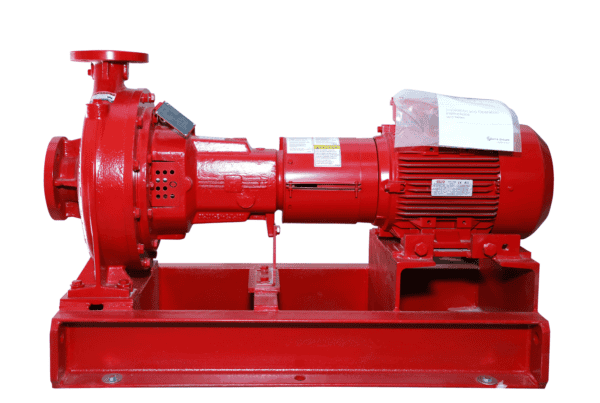
Dry rotor inline pumps. Standard motor with a mechanical seal. Used for larger flows and higher heads.
Sizing a circulation pump
Flow
- For heating or cooling: flow = load ÷ (4.19 × temperature difference). A 50 kW loop with a 10°C difference needs about 1.2 l/s.
- For hot water return: flow is set to make up the heat lost from the pipework, keeping the return temperature above the required minimum.
Head
The friction loss around the longest loop, including fittings, valves and heat exchangers. Circulation pump heads are usually low, often a few metres, because there is no static lift in a closed loop.
Oversizing is common and wastes energy. It can also cause noise and erosion in pipes and valves.
Controls
- Constant speed with timer: runs during set hours
- Thermostatic control: runs when the return temperature falls below a set point
- Variable speed (electronic): adjusts to the system’s needs automatically, cutting energy use
Materials
For drinking water loops, the pump body must be bronze or stainless steel. Cast iron bodies are for closed heating and cooling loops only, where oxygen levels are low.
Frequently asked questions
Does a circulation pump increase water pressure?
Not meaningfully. It moves water around a loop; a booster pump raises supply pressure.
Why is my circulation pump noisy?
Air in the system, an oversized pump running too fast, or worn bearings are common causes.
Should a hot water circulation pump run 24 hours?
Not necessarily. Timers or thermostatic control can cut running hours while keeping hot water available when needed.
Next step
See our circulation pumps or contact Lifeline to size one for your system.