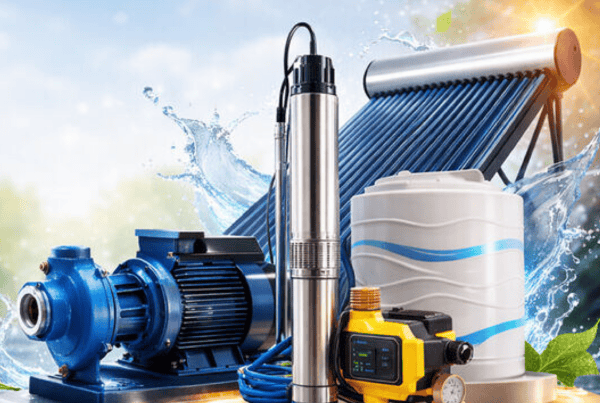

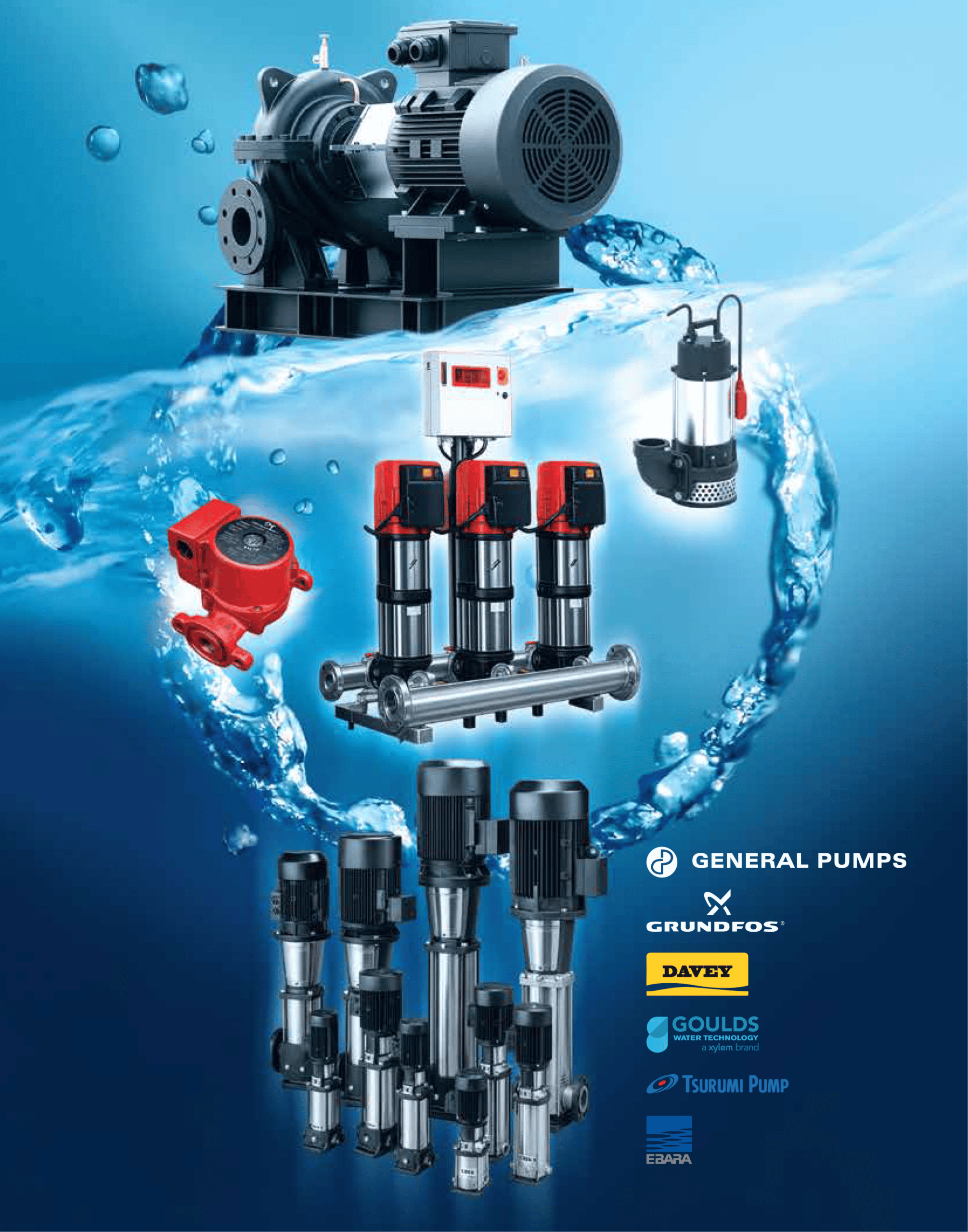

A booster pump is a pump that increases the pressure of water in a supply system. It is used when the pressure from the mains or from a storage tank is not enough to deliver water to every outlet at a usable pressure.
In the UAE, booster pumps are part of almost every multi-storey building, and of many villas. This guide explains how they work, the main types, and how to tell whether your building needs one.
Why water pressure drops
Water pressure at any outlet depends on three things:
- The pressure at the source. Mains pressure varies by area and time of day. Water from a roof tank has only the pressure created by its height above the outlet.
- Height. Every 10 metres of height costs about 1 bar of pressure. An outlet on the 20th floor needs about 6 bar more than one at ground level just to reach it.
- Friction. Water loses pressure as it flows through pipes, fittings and valves. The longer and narrower the pipework, and the more water flowing, the greater the loss.
If the pressure at the source cannot overcome height and friction and still leave enough pressure at the tap, the outlet will be weak or dry. A booster pump adds the missing pressure.
How a booster pump works
Most booster pumps are centrifugal pumps. An electric motor spins an impeller, which throws water outward and raises its pressure. In building booster systems, multistage pumps are common: several impellers are stacked in series, and each one adds pressure.
The pump takes water from a tank or the mains on its suction side and delivers it at higher pressure on its discharge side. A control system decides when the pump runs:
- Pressure switch control. The pump starts when pressure falls to a set point and stops when it reaches a higher point. A pressure vessel stores a small volume of pressurised water so the pump does not start for every small demand.
- Flow controller (pressure kit). The pump starts when pressure drops and stops when flow stops.
- Variable speed control. A variable frequency drive (VFD) changes the motor speed to hold a constant pressure as demand changes.
Types of booster pump
Single booster pumps. One pump with a pressure switch or integrated controller. Used in villas, small apartments and shops.
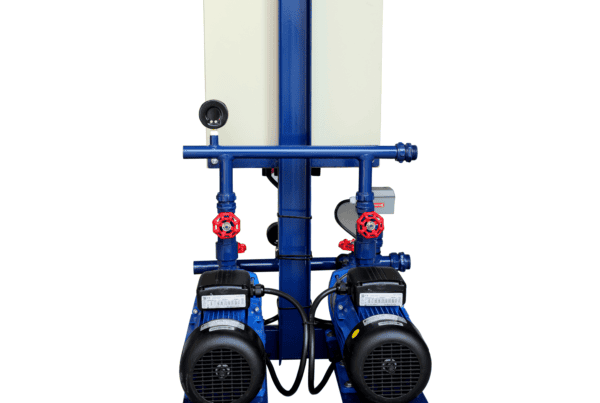
Booster pump sets. Two or more pumps on a common manifold with a control panel. One pump can stand by while the other runs, so supply continues if a pump fails. Used in towers, hotels, hospitals and commercial buildings. See booster pump sets.
Inline boosters. Small pumps installed directly in a pipe to raise pressure to one appliance or area.
Where booster pumps are used in the UAE
- High-rise buildings, where upper floors are too high for mains or roof tank pressure. Towers are often split into pressure zones, each with its own booster set or pressure reducing valves.
- Villas with ground or underground tanks, where gravity pressure is low or absent.
- Top floors under a roof tank. The floors just below a roof tank have very little gravity head and usually need boosting.
- Hotels and hospitals, where steady pressure at showers and equipment matters.
- Irrigation and process systems that need pressure above what the supply provides.
Booster pump vs transfer pump
These two are often confused. A transfer pump moves water from one tank to another, for example from an underground tank to a roof tank. A booster pump raises pressure in the network that feeds outlets. Many buildings have both.
Signs you need a booster pump
- Weak flow at showers and taps on upper floors
- Pressure drops sharply when more than one outlet is used
- Appliances such as water heaters or washing machines report low pressure
- The top floors of a building get less water than lower floors
Low pressure can also come from blocked strainers, faulty valves or undersized pipes, so it is worth checking these before adding a pump. See how to fix low water pressure in your home.
Frequently asked questions
Does a booster pump increase flow or pressure?
It increases pressure. Higher pressure usually gives better flow at the outlet, but the flow a pump can deliver is limited by its size and the pipework.
Can a booster pump run continuously?
A booster pump can run for long periods if it is sized and cooled correctly. Variable speed sets are designed to run at low speed during low demand rather than stopping and starting.
Does a booster pump need a tank?
Most building booster pumps draw from a storage tank. Connecting a pump directly to the mains is restricted by most UAE water authorities, so check the local regulations first.
How long does a booster pump last?
With correct sizing, dry-run protection and routine maintenance, a good quality booster pump can operate for many years. See how long does a water pump last.
Next step
To size a booster pump for your building, see how to size a booster pump set for a UAE building, or send your drawings to Lifeline for a selection. Contact Lifeline.